
 English
  Español
  Svenska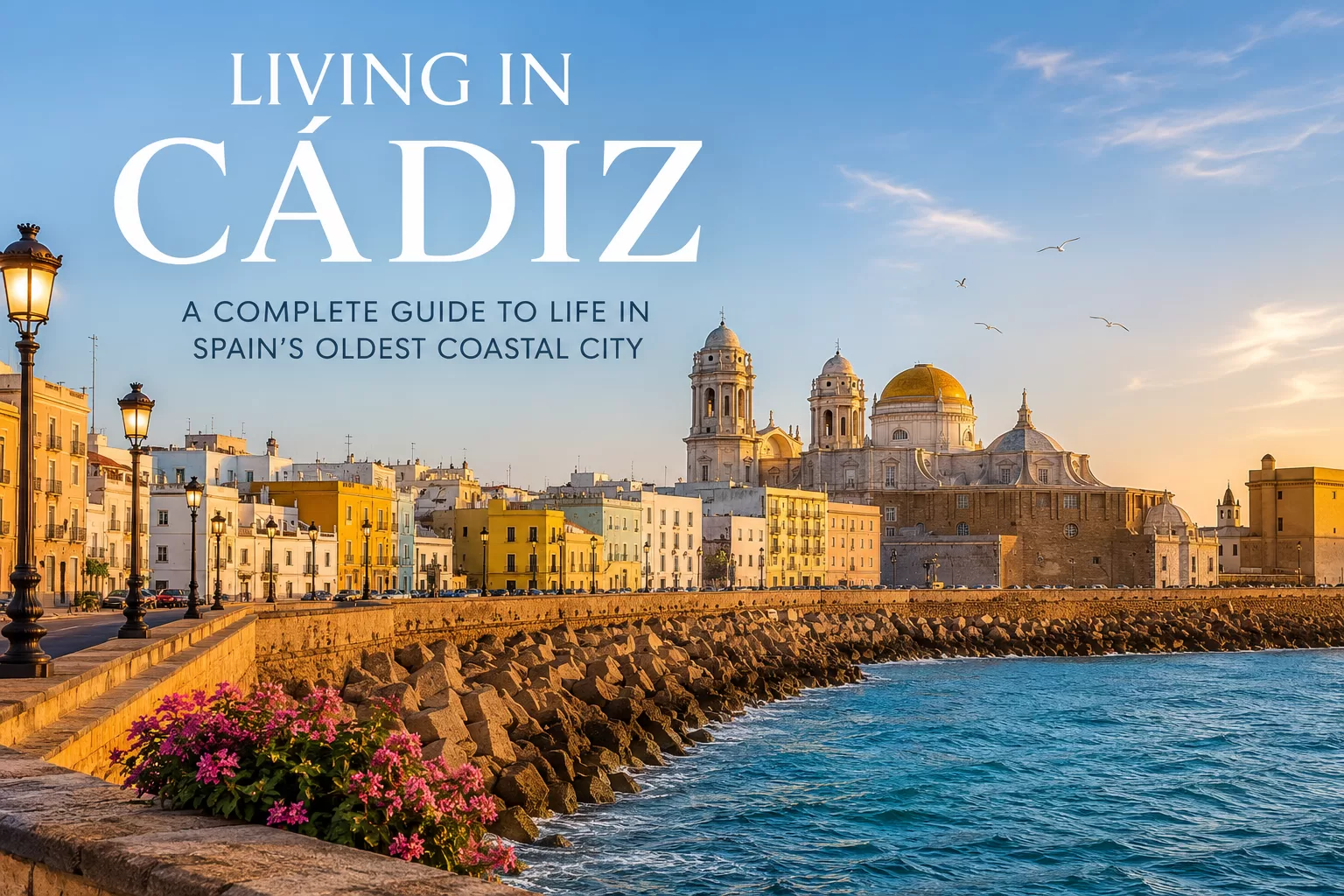
Living in Cádiz: A Complete Guide to Life in Spain's Oldest Coastal City
Life by the Atlantic
Discover what it's really like to live in Cádiz, one of Spain's oldest and most captivating coastal cities. From its golden beaches and rich history to its family-friendly neighbourhoods, excellent quality of life and vibrant Andalusian culture, this guide explores everything you need to know before making Cádiz your new home.
There are many beautiful places to live in southern Spain, but few have the character, charm and atmosphere of Cádiz. Surrounded almost entirely by the Atlantic Ocean, this ancient city offers something that is becoming increasingly difficult to find in modern Europe: an authentic way of life where history, community and the sea all play an important role in everyday living.
For many people considering a move to Spain, Cádiz initially appears on the map because of its beautiful beaches or impressive historic centre. Yet those who choose to settle here quickly discover that the city's greatest attraction isn't any single monument or landmark. Instead, it is the lifestyle itself. Life in Cádiz feels unhurried without being sleepy, vibrant without feeling overcrowded, and cosmopolitan while remaining unmistakably Andalusian.
Whether you're planning to retire in the sun, relocate with your family, work remotely by the coast or invest in a second home, Cádiz offers a quality of life that appeals to people from every stage of life. Days are spent walking through centuries-old streets, enjoying fresh seafood overlooking the ocean, shopping in bustling local markets or simply watching the sunset from one of the city's many beaches. It is a place where neighbours still greet one another, children play in the squares long after school has finished, and evenings often begin only after the heat of the day has faded.
Unlike many coastal destinations that exist primarily for tourism, Cádiz is first and foremost a living city. It has universities, hospitals, thriving local businesses, schools, cultural institutions and a strong sense of local identity. Visitors are welcomed, but life here continues at its own pace throughout the year. That authenticity is one of the reasons so many people who initially come for a holiday eventually decide to stay permanently.
A City Where Every Street Tells a Story
Living in Cádiz means becoming part of one of Europe's oldest continuously inhabited cities. Founded by the Phoenicians more than three thousand years ago, Cádiz predates Rome itself and has witnessed almost every major chapter of Mediterranean history. Over the centuries it has been shaped by Roman merchants, Moorish rulers, explorers returning from the Americas and wealthy trading families whose influence can still be seen throughout the city today.
Fortunately, this rich history has never turned Cádiz into an open-air museum. Instead, the past exists naturally alongside modern life. Residents pass Roman ruins on their way to work, children play football in squares surrounded by centuries-old buildings, and cafés spill onto streets that have been walked for generations.
One of the pleasures of living here is that the city constantly reveals new details. A quiet alleyway may suddenly open onto a hidden plaza filled with orange trees. A simple doorway might conceal an elegant courtyard decorated with colourful tiles and flowering plants. Looking upwards often reveals ornate balconies overflowing with flowers, while looking towards the sea reminds you that water is never very far away.
The historic centre remains the beating heart of Cádiz. Unlike many cities where old quarters become dominated by souvenir shops, the old town continues to function as a genuine neighbourhood. Families live above traditional bakeries, local markets continue to thrive, and small independent shops sit alongside lively tapas bars that have served the same customers for decades.
This sense of continuity creates a unique atmosphere that is difficult to describe until you experience it for yourself. History is not preserved behind barriers or glass cases—it forms part of everyday life.
Life by the Atlantic
The Atlantic Ocean defines Cádiz in almost every possible way. It shapes the climate, influences the local cuisine, inspires the architecture and dictates the rhythm of daily life. For residents, the sea quickly becomes something far more meaningful than a beautiful view. It becomes part of everyday routine.
Many mornings begin with a walk along the waterfront before work. The wide promenade fills early with runners, cyclists and people simply enjoying the fresh ocean air while the city slowly wakes up. Fishermen prepare their boats in the harbour, cafés begin serving coffee and toast, and the first swimmers head into surprisingly refreshing waters.
Unlike some coastal cities where beaches lie on the outskirts, Cádiz integrates them into urban life. You don't need to plan a special day out to enjoy the sea. It is perfectly normal to spend an hour at the beach after work, meet friends for an evening swim during summer, or enjoy lunch overlooking the ocean before wandering home through the historic streets.
La Caleta is perhaps the city's most iconic beach and perfectly captures the spirit of Cádiz. Framed by two centuries-old castles, it is not the largest beach in the city, but it is certainly the most atmospheric. During the evenings, residents gather on the sand to watch one of Andalusia's most spectacular sunsets, while musicians often provide an informal soundtrack as the sky changes from brilliant blue to shades of orange and pink.
Further along the coastline lies Playa de la Victoria, a long stretch of golden sand that consistently ranks among Spain's finest urban beaches. Despite its popularity, it rarely feels crowded thanks to its generous width and length. Families spread out with plenty of space, children build sandcastles while parents relax nearby, and beachside restaurants serve freshly grilled seafood throughout the day.
For those who enjoy a more active lifestyle, the Atlantic offers excellent conditions for surfing, paddleboarding, sailing and kayaking. Stronger waves occasionally attract surfers from across Andalusia, while calmer days provide ideal conditions for beginners looking to enjoy life on the water.
Perhaps the greatest luxury of living in Cádiz is that these experiences stop feeling exceptional. Instead, they simply become part of everyday life.
What Everyday Life Really Feels Like
People often ask what it is actually like to live in Cádiz once the excitement of moving has settled and daily routines begin. The answer lies in the city's remarkable ability to make ordinary days feel enjoyable.
Unlike larger cities where commuting dominates daily schedules, Cádiz encourages a more balanced way of living. Most errands can be completed on foot, meaning there is less time spent sitting in traffic and more time enjoying the city itself. A trip to buy fresh vegetables often turns into a conversation with familiar market traders. An evening walk may become an hour-long stop at a terrace café after meeting friends unexpectedly.
The city's compact size creates an unusually strong sense of community. It doesn't take long before local café owners remember your regular order or neighbours greet you by name. Newcomers often comment on how quickly Cádiz begins to feel familiar, even if they initially arrive without knowing anyone.
Food also plays an important role in everyday life. Rather than rushing through meals, people take time to enjoy them together. Lunch remains the main meal of the day, while evenings are often spent sharing tapas, conversation and local wine long after the sun has gone down. Outdoor terraces remain busy for much of the year thanks to the city's mild climate, creating an atmosphere where socialising happens naturally.
One of the most noticeable differences for people relocating from northern Europe is the amount of time spent outdoors. Children grow up playing in public squares, older residents gather on benches overlooking the sea, and weekends revolve around beaches, parks and family lunches rather than shopping centres.
This slower rhythm doesn't mean life lacks energy. Cádiz is full of activity, but it is activity that feels enjoyable rather than stressful. It is a city that encourages people to make time for the simple pleasures that often disappear in busier places: a coffee in the sunshine, a walk by the sea, a conversation with neighbours or an evening spent watching the waves roll onto the shore.
For many people, this is ultimately why Cádiz becomes more than simply a place to live. It becomes a place where life feels easier, richer and more connected.
Is Cádiz a Good Place to Raise a Family?
For families considering a move to Spain, Cádiz offers a combination that is becoming increasingly rare: the amenities of a city with the atmosphere of a close-knit community. While many people first associate Cádiz with holidays and sunshine, it is, above all, a city where generations of families have built their lives. This becomes obvious remarkably quickly once you begin exploring its neighbourhoods. Schools fill the streets with children each morning, local parks buzz with activity in the afternoons, and families gather along the beaches well into the evening during the warmer months.
One of the greatest advantages for parents is the city's manageable size. Daily life is far less dependent on long commutes than in larger Spanish cities, allowing more time to be spent together. Many families walk their children to school, stop at the local bakery on the way home, and spend evenings outdoors instead of indoors. The beaches effectively become an extension of the city's parks, providing space to play, exercise and socialise throughout much of the year.
Safety is another reason why many people choose Cádiz. Like anywhere, common sense is always advisable, but the city has a reputation for being welcoming and comfortable to navigate. Children often play together in neighbourhood squares while parents enjoy a coffee nearby, creating a sense of community that many newcomers find refreshing after living in larger urban areas.
The relaxed lifestyle also encourages healthier habits. Fresh food is readily available, walking is part of everyday life, and outdoor activities replace hours spent indoors. For many families relocating from colder climates, simply being able to spend much of the year outside has a noticeable impact on daily life.
Education in Cádiz
Moving with children inevitably raises questions about education, and fortunately Cádiz offers a wide range of options.
Spain's public education system is well regarded, and the city has numerous public primary and secondary schools serving local communities. These schools naturally teach in Spanish, making them an excellent option for younger children who often adapt to the language remarkably quickly.
Many families also choose one of the city's concertado schools. These are privately managed schools that receive public funding and are particularly popular throughout Spain. They often provide smaller class sizes while remaining considerably more affordable than fully private education.
For international families who prefer an English-speaking curriculum, several bilingual and international schools can be found within easy driving distance, particularly around El Puerto de Santa María and Jerez de la Frontera. These schools attract both expatriate families and Spanish parents seeking a bilingual education for their children.
Higher education is another strength of the region. The University of Cádiz has campuses throughout the province and brings a youthful energy to the city. Its presence supports research, culture and innovation while ensuring Cádiz remains vibrant throughout the academic year.
Healthcare and Peace of Mind
Access to high-quality healthcare is one of the factors that makes Spain such an attractive country to relocate to, and Cádiz is no exception.
Residents benefit from an excellent public healthcare system supported by modern hospitals, health centres and specialist clinics. Medical professionals are highly trained, waiting times for urgent care are generally good, and pharmacies are widely available throughout the city.
Many international residents also choose private health insurance, not because public healthcare is lacking, but because it offers faster access to specialists and the convenience of multilingual services. Even private healthcare remains significantly more affordable than many people moving from Northern Europe or North America expect.
Knowing that excellent healthcare is readily available provides considerable reassurance, particularly for retirees and families with young children.
A City Built Around Food
In Cádiz, food is never simply about eating. It is part of the city's identity and one of the ways people spend time together.
Being surrounded by the Atlantic means seafood naturally plays a starring role on almost every menu. Each morning the fish market receives fresh catches that quickly make their way to restaurants across the city. Tuna, prawns, squid, octopus and sea bass all feature prominently, often prepared using recipes that have changed little over generations.
Yet the appeal of Cádiz extends well beyond seafood. Local markets overflow with seasonal vegetables, Iberian ham, artisan cheeses, olives and freshly baked bread. Shopping for ingredients is still something many residents do daily rather than weekly, giving neighbourhood markets a lively atmosphere throughout the morning.
Dining out is equally enjoyable. Rather than formal occasions, meals are woven into everyday life. It is perfectly normal to meet friends for a few tapas after work or spend several leisurely hours sharing lunch with family on a sunny terrace. Unlike in many tourist destinations, local restaurants remain busy throughout the year because they serve residents as much as visitors.
The nearby Sherry Triangle also deserves special mention. The historic wine region surrounding Jerez produces some of Spain's most distinctive wines, many of which are enjoyed alongside local cuisine. Wine tastings and vineyard visits make wonderful weekend excursions for anyone living in the area.
Living Through the Seasons
Although Cádiz enjoys sunshine for much of the year, the city changes subtly with each season, giving residents something new to appreciate.
Spring is perhaps the most beautiful time of year. Orange blossoms perfume the streets, temperatures become pleasantly warm, and outdoor cafés begin filling with people enjoying longer evenings. It is an ideal season for walking, cycling and exploring nearby natural parks.
Summer naturally revolves around the beaches. The city becomes livelier as visitors arrive, but because Cádiz has always been a functioning city rather than purely a resort, everyday life continues much as usual. Residents know the quieter corners of the beaches, enjoy late-night strolls along the promenade and embrace the relaxed rhythm that accompanies the warmer months.
Autumn often surprises newcomers. The sea remains warm enough for swimming well into October, while the crowds gradually disappear, leaving the city feeling wonderfully peaceful.
Winter is mild by European standards. Daytime temperatures frequently remain comfortable enough for outdoor lunches, and sunny afternoons make walking through the historic centre a pleasure. While northern Europe often faces grey skies and freezing temperatures, life in Cádiz continues outdoors.
Carnival: The City's Heartbeat
No discussion of Cádiz would be complete without mentioning its legendary Carnival.
Although visitors often compare it to the celebrations in Rio de Janeiro or Venice, Cádiz Carnival possesses a personality entirely its own. Rather than focusing on spectacle alone, it is built around humour, music and local participation.
For several weeks each year the city transforms. Streets fill with colourful costumes, musicians perform satirical songs that gently mock politicians and current events, and every neighbourhood joins in the celebrations. Families, children, students and grandparents all become part of the festivities.
Perhaps the most remarkable aspect is that Carnival belongs to the people of Cádiz. While tourists are warmly welcomed, the festival never feels staged or commercial. It is a genuine expression of local culture that has been passed down through generations.
Living in Cádiz means experiencing Carnival not as a visitor, but as part of the community.
Choosing the Right Neighbourhood
One of Cádiz's greatest strengths is that every neighbourhood has its own distinct character.
The historic old town attracts those who dream of living among centuries-old buildings, lively plazas and charming cafés. Here, daily life unfolds against a backdrop of narrow streets, hidden courtyards and historic architecture. Apartments often occupy beautifully restored buildings, and everything is within walking distance.
La Laguna offers a different experience. Wider streets, modern apartment buildings and proximity to Playa de la Victoria make it especially attractive to families. Schools, supermarkets and local services are all close at hand, creating an easy and practical lifestyle.
Bahía Blanca is widely regarded as one of the city's most desirable residential areas. Elegant homes, quieter streets and generous green spaces attract professionals and families seeking a more residential atmosphere while remaining close to the centre.
Further south, Cortadura provides easy access to some of the province's longest beaches and newer residential developments. It appeals to buyers who value space and modern living without sacrificing proximity to the sea.
The beauty of Cádiz is that whichever neighbourhood you choose, the ocean, the historic centre and the city's amenities are never far away.
Exploring Beyond the City
Although many residents quickly fall in love with Cádiz itself, one of the greatest benefits of living here is the ease with which the rest of Andalusia can be explored.
Within half an hour you can find yourself wandering through the elegant streets of El Puerto de Santa María, tasting world-famous sherry in Jerez de la Frontera or relaxing on the expansive beaches of Chiclana.
A little further south lies Vejer de la Frontera, widely regarded as one of Spain's most beautiful white villages. Its maze of whitewashed streets, flower-filled balconies and panoramic countryside views make it a favourite destination for weekend lunches.
Nature lovers can spend the day hiking in the Sierra de Grazalema, watching migratory birds in nearby wetlands or taking a ferry across the Bay of Cádiz simply to enjoy the scenery from the water.
The southern tip of Spain is also within easy reach. Tarifa, famous for its dramatic coastline and world-class windsurfing, offers a completely different atmosphere, while Gibraltar provides a fascinating blend of British and Mediterranean culture.
Living in Cádiz means having an extraordinary variety of landscapes, towns and experiences all within comfortable driving distance.
Working Remotely and Modern Living
The rise of remote working has encouraged many professionals to rethink where they want to live. Cádiz has become an increasingly attractive option for those who no longer need to commute to a major city each day.
Reliable internet, excellent cafés, coworking spaces and an outstanding quality of life combine to create an environment where work and leisure feel far more balanced. Finishing work no longer means sitting in traffic. Instead, it may involve an evening swim, a walk along the promenade or dinner overlooking the Atlantic.
Many newcomers discover that productivity actually improves when daily stress is reduced. The slower pace of life allows space to think, while the city's cultural life ensures there is always something to enjoy outside working hours.
Buying Property in Cádiz
The property market in Cádiz reflects the city's unique appeal. Demand remains strong thanks to limited space, historic architecture and increasing interest from both Spanish buyers and international residents.
The historic centre is filled with elegant apartments occupying beautifully restored buildings, many featuring traditional Andalusian courtyards, high ceilings and charming balconies. These properties appeal to buyers looking for character and a truly authentic city-centre lifestyle.
Closer to the beaches, more modern apartments offer contemporary comforts with easy access to the coast. Families often favour these neighbourhoods thanks to larger living spaces, parking and proximity to schools.
Compared with Spain's most expensive coastal cities, Cádiz continues to offer good value considering its location, quality of life and cultural significance. While premium seafront properties naturally command higher prices, buyers can still find excellent opportunities across different parts of the city.
Whether searching for a permanent residence, holiday apartment or investment property, Cádiz offers a diverse selection of homes suited to a wide variety of budgets and lifestyles.
Is Cádiz Right for You?
Every city has its own personality, and Cádiz is no exception.
If your ideal lifestyle revolves around nightlife, skyscrapers and fast-paced urban living, you may find larger cities better suited to your preferences.
However, if you value community, beautiful surroundings, excellent food, rich history and a healthier balance between work and leisure, Cádiz becomes an exceptionally attractive choice.
It is equally appealing to young professionals seeking a slower pace of life, families wanting children to grow up near the sea, retirees looking for sunshine and healthcare, and remote workers searching for inspiration beyond the traditional office.
Many people arrive planning to stay for a few months. A surprising number never leave.
Final Thoughts
There are countless beautiful places to live in Spain, yet Cádiz possesses something that cannot easily be measured or compared. It is not simply the impressive history, the endless beaches or the remarkable climate that make the city so special. It is the way these elements come together to create a lifestyle that feels genuinely fulfilling.
Here, the sea becomes part of your daily routine rather than an occasional luxury. Historic streets become familiar shortcuts on your walk home. Local shopkeepers greet you by name, neighbours become friends, and weekends are filled with simple pleasures that rarely require careful planning.
Cádiz encourages a different way of living—one where quality of life takes precedence over rushing from one obligation to the next. It reminds people that happiness is often found in everyday moments: sharing lunch with family, watching the sunset over the Atlantic, wandering through streets that have stood for centuries, or enjoying a quiet morning coffee while the city slowly comes to life.
For anyone considering a move to southern Spain, Cádiz is much more than an attractive place to buy a property. It is a place to build a life. Whether you are searching for a family home, a retirement haven, a coastal apartment or simply a fresh start beneath the Andalusian sun, Cádiz offers an authenticity and warmth that continue to captivate everyone fortunate enough to call it home.
Perhaps the greatest compliment that can be paid to Cádiz is this: people rarely stop talking about how beautiful it is, but those who live here soon stop noticing the beauty because it simply becomes part of everyday life. Instead, what they notice is something even more valuable—the feeling of truly belonging.
Frequently Asked Questions
What is this guide about?
Discover what it's really like to live in Cádiz, one of Spain's oldest and most captivating coastal cities. From its golden beaches and rich history to its family-friendly neighbourhoods, excellent quality of life and vibrant Andalusian culture, this guide explores everything you need to know before making Cádiz your new home.
Who is this guide useful for?
Buyers, sellers, and property investors looking for practical local insights before making decisions.
Which area does this article cover?
This guide focuses on Cadiz in Spain.
When was this guide published?
Published on June 30, 2026.
Need broader help? Visit our main FAQ page.



Properties in Cadiz
Browse approved homes and listings in the same area.
