English
  Español
  Svenska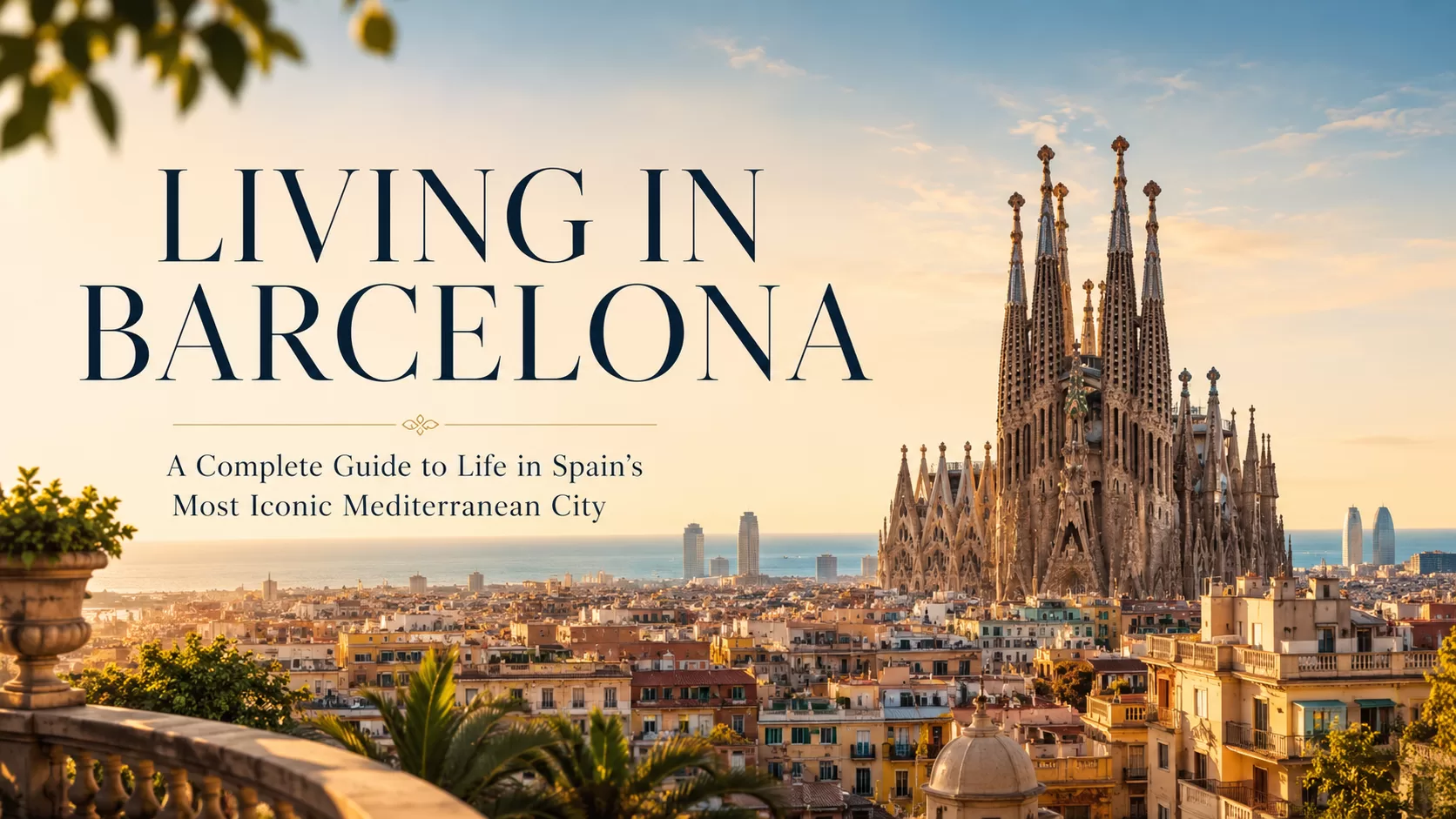
Barcelona: A Complete Guide to Life in Spain’s Most Iconic Mediterranean City
variety is one of Barcelona’s greatest strengths
Barcelona is one of Spain’s most iconic places to live, combining Mediterranean beaches, world-famous architecture, international schools, excellent healthcare and a vibrant cultural scene. This complete guide explores what life in Barcelona is really like, from its distinctive neighbourhoods and property market to its family-friendly lifestyle, creative energy and everyday pleasures by the sea.
Barcelona is one of those cities that people imagine long before they arrive. The name alone brings to mind golden light, Modernist architecture, palm-lined avenues, late dinners, creative energy and the Mediterranean Sea. For many people thinking about moving to Spain, Barcelona feels like the dream made practical: a city with beaches and business, culture and climate, international schools and neighbourhood cafés, world-famous landmarks and everyday local life.
Yet Barcelona is also more complex than its postcard image. It is not simply a beautiful coastal city or a famous weekend destination. It is the capital of Catalonia, Spain’s second-largest city, one of Europe’s most visited urban centres and a place with a strong identity of its own. It is creative, ambitious, multilingual, stylish, sometimes crowded, often inspiring and always full of movement. To live here is to experience a city where Mediterranean ease meets international energy.
As of January 2025, Barcelona’s registered population reached 1,732,066 residents, its highest figure in four decades. The wider Barcelona Metropolitan Area covers 36 municipalities and is home to more than 3.2 million people, which means that while the city itself feels compact, its influence and daily life extend far beyond the municipal boundary.
For property buyers, international families, remote workers, professionals and retirees, Barcelona offers one of the most attractive lifestyle combinations in Spain. It has the sea, a strong economy, excellent transport, world-class healthcare, celebrated architecture, outstanding food, international education and easy access to both mountains and countryside. Few European cities offer so many different ways to live well.
Barcelona is not the quietest place to move to in Spain, nor is it the cheapest. It is a real city with real pressures, from tourism and housing demand to summer heat and busy streets. But for those who want beauty, culture, connection and a cosmopolitan Mediterranean lifestyle, Barcelona remains one of the most compelling places to live in Europe.
Why Move to Barcelona?
The appeal of Barcelona begins with its setting. The city sits between the Mediterranean Sea and the Collserola hills, giving it a natural structure that is rare among major cities. On one side are beaches, marinas and waterfront promenades. On the other are green slopes, viewpoints and residential districts that climb gently away from the centre. Between them lies a dense, walkable and architecturally rich city that manages to feel both grand and intimate.
For many newcomers, the greatest attraction is balance. Barcelona offers professional opportunity without giving up the pleasures of coastal life. You can work in technology, design, education, healthcare, hospitality, finance, real estate or international business, then finish the day with a swim, a walk along the seafront or dinner on a terrace. This combination of career and lifestyle is one of the reasons Barcelona attracts people from across Europe and beyond.
The city is especially appealing to those who want an international environment. English is widely heard in professional, academic and start-up circles, while Spanish and Catalan shape daily life. This multilingual reality gives Barcelona a distinctive atmosphere. It is open to the world, but not anonymous. It welcomes international residents, yet it remains deeply Catalan in culture, language and civic identity.
Barcelona also has an extraordinary cultural depth. It is home to some of Europe’s most recognisable architecture, including the works of Antoni Gaudí, several of which are recognised by UNESCO as part of the “Works of Antoni Gaudí” World Heritage listing. Park Güell, Palau Güell and Casa Milà were originally inscribed in 1984, with the listing later expanded to include additional Gaudí works.
For families, Barcelona offers strong educational choice, from local public and concertado schools to a broad selection of private and international schools in and around the city. For professionals, it offers networking, innovation and access to European markets. For retirees, it offers healthcare, culture, climate and walkability. For property buyers, it offers long-term desirability and a wide range of neighbourhood lifestyles.
Above all, Barcelona offers a daily life that feels full. You do not need to plan constantly to enjoy the city. A simple walk can take you past Modernist façades, shaded plazas, neighbourhood markets, independent shops, cafés, galleries and the sea. The city has a way of making ordinary routines feel beautifully designed.
The Feel of Barcelona
Barcelona has a personality that is immediately recognisable. It is stylish but informal, creative but practical, historic but forward-looking. Compared with Madrid, it feels more Mediterranean and more compact. Compared with Valencia, it feels more international and intense. Compared with Málaga, it feels more urban and ambitious. It occupies a unique position in Spain: coastal but not sleepy, historic but not frozen in time, international but not detached from local identity.
The rhythm of life changes depending on where you are. In Eixample, the streets are broad and ordered, with elegant apartment buildings, boutiques, offices and restaurants arranged along one of Europe’s most famous urban grids. In Gràcia, the atmosphere becomes more village-like, with small squares, independent shops and a strong neighbourhood spirit. In Poblenou, former industrial spaces have become studios, offices, lofts and creative hubs. In Sarrià, the pace slows into something more residential, leafy and refined. In Barceloneta, the sea defines daily life.
This variety is one of Barcelona’s greatest strengths. It is not a city of one mood. It can be elegant, bohemian, beachy, family-focused, luxurious, artistic, corporate or relaxed depending on the district. Choosing where to live is therefore not simply a question of budget. It is a question of identity.
Barcelona’s beauty is also unusual because it is not confined to monuments. Of course, the Sagrada Família, Casa Batlló, La Pedrera and Park Güell are extraordinary. But the city’s deeper beauty lies in the way design appears everywhere. Balconies, pavements, courtyards, market halls, street lamps, doorways and tiled façades all contribute to a sense that the urban environment has been thought about carefully.
The Mediterranean light gives the city another layer of appeal. Mornings can feel crisp and bright, afternoons glow against pale stone façades, and evenings often soften into warm shades of gold and pink. Even in winter, the light can make the city feel alive.
Yet Barcelona is not only beautiful. It is busy, opinionated and sometimes demanding. Tourism is part of the city’s reality, and in the most visited areas residents must share space with a constant flow of visitors. Housing is competitive. Summers can be humid. Some neighbourhoods are noisy. This honesty matters because Barcelona is not a fantasy; it is a living city. But for those who understand its rhythm, its rewards are enormous.
Everyday Life in Barcelona
Living in Barcelona is different from visiting Barcelona. Tourists often move between major sights, but residents quickly develop a more personal version of the city. Their Barcelona is made up of a local bakery, a preferred fruit shop, a favourite plaça, a regular beach walk, a familiar metro line and a neighbourhood café where the waiter remembers how they take their coffee.
Daily life is highly walkable in many districts. Barcelona’s compact structure makes it easy to live locally, especially in central and inner neighbourhoods. Many residents can walk to shops, schools, gyms, markets, restaurants and public transport. The result is a lifestyle where the street becomes an extension of the home.
Food shopping remains one of the pleasures of the city. Barcelona’s markets are central to neighbourhood life. La Boqueria is famous internationally, but residents often rely on local markets such as Mercat de Sant Antoni, Mercat de la Concepció, Mercat de la Llibertat in Gràcia or Mercat del Ninot in Eixample. These markets are not simply places to buy food. They are social spaces, lunch spots and daily anchors.
Café culture is equally important. Breakfast might be a coffee and pastry before work, or pa amb tomàquet with olive oil and a small café con leche. Later in the day, cafés become meeting places, workspaces and pauses in the rhythm of the city. Barcelona has a strong speciality coffee scene, but it also retains traditional bars where locals read the paper, chat with neighbours or stand at the counter for a quick espresso.
Evenings are when Barcelona becomes especially enjoyable. The city is made for strolling. People walk through Eixample after work, gather in Gràcia’s squares, head towards the beach, meet for vermouth, or sit outside for dinner long after sunset. Like much of Spain, Barcelona lives late, although its schedule can feel slightly more European than Madrid’s in some professional circles.
Weekends can take many forms. A family might spend Saturday morning in a park, lunch near the market and the afternoon at the beach. A couple might visit a gallery, walk through El Born and have dinner in Sant Antoni. A remote worker might cycle to Poblenou, swim at Bogatell and meet friends in Gràcia. Barcelona gives people many ways to enjoy free time without leaving the city.
Life by the Mediterranean
The sea is one of Barcelona’s defining advantages. While some major European cities have rivers or lakes, Barcelona has the Mediterranean directly woven into urban life. The beaches are not remote resorts on the outskirts. They are part of the city’s daily geography.
Barcelona’s coastline includes several beaches, each with its own personality. Sant Sebastià and Barceloneta are among the most central and historic, closely connected to the old fishing quarter and the energy of Ciutat Vella. Barceloneta is the busiest and most famous, a place where locals, tourists, runners, swimmers and beach bars all share the same stretch of sand. Further along the coast, Nova Icària, Bogatell, Mar Bella, Nova Mar Bella and Llevant offer different moods, from family-friendly swimming to sportier, more relaxed or more local atmospheres. The official city tourism platform describes Barcelona’s beaches as accessible public spaces with services, leisure areas and easy transport connections.
For residents, the beach becomes more than a place to sunbathe. It becomes part of ordinary life. People run along the promenade before work, swim in the morning, cycle by the sea, meet friends after the office or simply walk beside the water to clear their head. Even those who do not go to the beach every day benefit from knowing it is there.
The waterfront also gives Barcelona a sense of openness. In a dense city, the sea offers visual space and emotional relief. During busy weeks, a short walk to the coast can change the mood of the day entirely.
The beaches are busiest in summer, particularly around Barceloneta. Residents often learn to choose quieter times, move further along the coast or use the sea outside peak tourist hours. Early mornings and late evenings can be especially beautiful, when the city feels calmer and the Mediterranean becomes part of local life rather than a visitor attraction.
Architecture, Design and the Beauty of the City
Barcelona is one of the great architectural cities of the world. Its identity is inseparable from design, and this is one of the reasons living here can feel visually rewarding every day.
Antoni Gaudí is the city’s most famous architectural figure, and his influence is impossible to ignore. The Sagrada Família remains Barcelona’s most recognisable landmark, a basilica that has shaped the city’s skyline for generations. In 2026, the basilica’s tallest tower, the Tower of Jesus Christ, was scheduled to reach 172.5 metres, marking a major step towards the final stage of construction.
Yet Gaudí is only part of the story. Barcelona’s Modernist heritage includes architects such as Lluís Domènech i Montaner and Josep Puig i Cadafalch, whose buildings give the city extraordinary richness. The Palau de la Música Catalana, Hospital de Sant Pau, Casa Amatller and countless residential façades contribute to an urban landscape where art and architecture overlap.
Eixample is perhaps the clearest expression of Barcelona’s design intelligence. Its grid, chamfered corners and broad avenues create order, light and movement. Originally planned in the 19th century by Ildefons Cerdà, it remains one of the most recognisable urban plans in Europe. Living in Eixample means inhabiting a district where structure and beauty work together. The streets are practical, but also elegant.
The Gothic Quarter offers a completely different experience. Here, narrow medieval streets, hidden squares, stone walls and historic churches create a sense of depth and mystery. It is atmospheric and beautiful, though not always the easiest place for everyday living due to tourism, older buildings and limited light in some apartments.
Barcelona’s contemporary architecture also deserves attention. The city has continued to reinvent itself through projects connected to the Olympics, the waterfront, Poblenou, 22@, Glòries and Diagonal Mar. This mix of medieval, Modernist and modern architecture makes Barcelona feel layered rather than uniform.
For property buyers, architecture is not only aesthetic. It affects light, layout, maintenance, energy efficiency and lifestyle. A Modernist apartment in Eixample may offer high ceilings, original floors and charm, while a modern apartment in Poblenou may offer better insulation, parking and communal facilities. Barcelona’s architectural diversity allows buyers to choose not just where they live, but how they want daily life to feel.
Barcelona’s Neighbourhoods: Finding the Right Fit
Choosing the right neighbourhood is the most important decision when moving to Barcelona. The city is divided into 10 municipal districts and 73 neighbourhoods, a structure officially recognised by the city’s territorial division. Within this framework, each area has its own personality, price level and lifestyle.
Eixample is one of the most popular choices for international buyers and long-term residents. It is central, elegant, well connected and full of beautiful buildings. The district is divided into areas with distinct characters, including Dreta de l’Eixample, Esquerra de l’Eixample, Sant Antoni and Sagrada Família. Dreta de l’Eixample is particularly prestigious, with proximity to Passeig de Gràcia, luxury shops and iconic architecture. Esquerra de l’Eixample feels slightly more residential and practical, with excellent services and a strong local life. Sant Antoni has become one of the city’s most desirable neighbourhoods for younger professionals and food lovers, thanks to its market, cafés and lively but manageable atmosphere.
Gràcia is ideal for those who want charm, community and independence. Once a separate town, it still feels like a village within the city. Its plazas are full of life, its streets are smaller and more intimate, and its independent shops give it a creative, local feel. Families, artists, professionals and long-term international residents all find Gràcia appealing. It is lively, but in a neighbourhood way rather than a big-city way.
Sarrià-Sant Gervasi is one of Barcelona’s most desirable residential areas, especially for families. It offers leafy streets, larger homes, good schools, a quieter atmosphere and access to the upper part of the city. Sarrià itself retains a village feeling, with charming streets and local bakeries, while Sant Gervasi offers elegant apartments and strong transport links. This area is particularly popular with families who want space, comfort and proximity to international schools.
Les Corts and Pedralbes are also strong family choices. Les Corts is practical, well connected and residential, while Pedralbes is one of the city’s most exclusive areas, known for spacious homes, greenery, prestige and proximity to private schools and university campuses. Buyers seeking tranquillity, security and larger properties often focus here.
Poblenou has changed dramatically over recent decades. Once industrial, it is now one of Barcelona’s most dynamic areas, combining creative offices, tech companies, loft-style living, new developments and access to the beach. The Rambla del Poblenou gives the neighbourhood a local heart, while nearby 22@ has become a major innovation district. Poblenou suits professionals, entrepreneurs, remote workers and families who want a modern lifestyle close to the sea.
El Born is beautiful, historic and full of atmosphere. Its narrow streets, boutiques, galleries, restaurants and proximity to Ciutadella Park make it one of Barcelona’s most attractive central neighbourhoods. It can be busy, especially in the evenings and tourist seasons, but for those who want character and culture, it remains highly appealing.
The Gothic Quarter is atmospheric but more complicated for full-time living. It offers history, charm and centrality, but also noise, tourism, older buildings and limited outdoor space. Some buyers fall in love with its romance, while others prefer to enjoy it as a place to visit rather than live.
Barceloneta is unlike anywhere else in the city. Its narrow streets, old fishermen’s houses, seafood restaurants and immediate beach access create a distinctive seaside atmosphere. Apartments are often smaller, and the area can be very busy, but for those who want the sea at their doorstep, Barceloneta has undeniable appeal.
Sant Antoni has become one of Barcelona’s great success stories. Located beside Eixample and close to the old city, it offers excellent food, a renovated market, cafés, bars and a strong neighbourhood identity. It is central but less polished than the most expensive parts of Eixample, making it attractive to younger buyers, professionals and people who value urban energy.
Sants is practical, well connected and increasingly attractive. Its major railway station makes it ideal for travel, while the neighbourhood itself remains local, functional and more affordable than many central areas. It is a good option for those who want real city life without paying the highest prime prices.
Horta-Guinardó and parts of the upper city offer more space, quieter streets and views. These areas may appeal to families and buyers seeking value, greenery and a calmer rhythm while remaining connected to the centre by metro or bus.
There is no single best place to live in Barcelona. The right choice depends on whether you want beach access, schools, nightlife, quiet, prestige, authenticity, modern housing, historic charm or investment potential. Barcelona rewards careful neighbourhood selection.
Is Barcelona Good for Families?
Barcelona can be an excellent city for families, particularly those who want children to grow up in an international, active and culturally rich environment. It offers parks, beaches, schools, sports clubs, museums, libraries, language learning and a lifestyle where children are generally welcome in public spaces.
Family life in Barcelona often revolves around neighbourhood routines. Children walk to school, play in plazas, attend after-school activities and spend weekends between parks, beaches and family lunches. The city’s compactness makes it easier to create a local rhythm, especially if school, home and daily services are within walking distance.
The beach is a major advantage for families. Even if summer weekends can be crowded, the ability to take children to the sea after school or enjoy a winter walk along the waterfront is something many families value deeply. Parks also play an important role. Ciutadella Park, Turó Park, Parc del Guinardó, Parc de Cervantes, Parc de Joan Miró and the green spaces of Montjuïc all provide room to play, walk and relax.
Barcelona is also culturally rich for children. Museums, music schools, sports clubs, theatres, language centres and creative workshops are widely available. The city exposes children to art, architecture, languages and international influences from an early age.
For international families, the main challenge is choosing the right school and neighbourhood together. A wonderful home is less practical if the daily school commute is difficult. Many families therefore begin with school selection and then choose a neighbourhood that makes daily life manageable.
The city is family-friendly, but not suburban in the traditional sense unless you move towards the upper districts or surrounding municipalities. Central apartments may be smaller, outdoor private space can be limited, and traffic or noise can be concerns. Families who want gardens, large homes or quieter streets often look to Sarrià-Sant Gervasi, Les Corts, Pedralbes, Sant Just Desvern, Esplugues, Sant Cugat or Castelldefels.
For families who want culture, languages, sea air and city opportunity, Barcelona is hard to beat. It offers a childhood that can be active, multilingual and full of discovery.
Schools and Education in Barcelona
Education is one of Barcelona’s strongest advantages for relocating families. The city offers public schools, concertado schools, private schools and a substantial international school network. This makes it possible for families to choose between local integration, bilingual education or continuity with a foreign curriculum.
Public schools teach primarily within the Catalan education system, with Catalan playing a central role alongside Spanish and other languages. For younger children, this can be an excellent path to integration. Children often adapt quickly and become multilingual in a way that can benefit them for life.
Concertado schools are also common and popular with local families. These semi-private schools receive public funding but are privately managed, often offering a balance between affordability and structure.
Private and international schools are especially important for families relocating from abroad. Barcelona and its surrounding areas offer British, American, French, German, Swiss, IB and other international curricula. Many of the best-known schools are located in the upper part of the city or nearby municipalities such as Sant Cugat, Esplugues, Castelldefels and Sitges. Recent international school guides list a large number of international options across Barcelona, reflecting the city’s strong appeal to globally mobile families.
For older children, school choice becomes particularly important because language, curriculum and exam pathways can affect university options. Families planning a move should research admissions early, as popular schools may have waiting lists.
Barcelona is also a major university city. Institutions such as the University of Barcelona, Pompeu Fabra University, ESADE, IESE and UPC attract students and researchers from around the world. This gives the city an intellectual and international energy that extends well beyond primary and secondary education.
Healthcare in Barcelona
Healthcare is one of the main reasons Spain is attractive to international residents, and Barcelona is particularly strong in this area. The city has major public hospitals, private clinics, specialist centres and a deep medical research ecosystem.
Hospital Clínic de Barcelona describes itself as a leading public healthcare provider in Barcelona, Catalonia and internationally, with a strong commitment to healthcare, research and teaching. Vall d’Hebron is another major healthcare campus, combining patient care with research and innovation.
Residents who qualify for Spain’s public healthcare system can access high-quality care through the Catalan health service. Many international residents also choose private insurance, especially if they want shorter waiting times, English-speaking doctors or more flexibility in choosing specialists. Private healthcare in Spain is often more affordable than in countries such as the United States, while still offering excellent standards.
For families, retirees and anyone with ongoing medical needs, Barcelona’s healthcare infrastructure provides reassurance. The city’s size means specialist care is generally available, and pharmacies are found throughout every neighbourhood.
Getting Around Barcelona
Barcelona is one of Europe’s easiest cities to navigate without a car. Its public transport system includes metro, buses, tram, local rail, commuter trains, taxis and bike services. The official TMB network provides metro and bus information, maps, timetables and tickets, while Metro line L9 Sud connects Barcelona Airport with the city in around 30 minutes.
For residents, the metro is usually the fastest and most reliable way to move across the city. It connects central districts, residential areas, business zones, beaches, railway stations and many outer neighbourhoods. Buses are useful for routes not covered directly by metro, especially in the hillier upper districts. Trams serve parts of Diagonal and the metropolitan area, while FGC and Rodalies trains connect Barcelona with nearby towns and suburbs.
Cycling has also become more common, supported by bike lanes and the city’s relatively compact layout. Some areas are easier to cycle than others, but the growth of cycling infrastructure has made it a practical option for many residents.
Owning a car is not necessary for many people living in central Barcelona. In fact, it can be more of a burden than a benefit due to parking, traffic and low-emission restrictions. A car becomes more useful for families in upper districts, people living outside the centre or those who regularly travel to the Costa Brava, Pyrenees or inland Catalonia.
Barcelona’s airport is another major advantage. Josep Tarradellas Barcelona-El Prat Airport is Spain’s second-busiest airport after Madrid-Barajas and the main airport for Catalonia and the Mediterranean coast. It handled around 57.5 million passengers in 2025, a record year for the airport.
For international residents, frequent travellers and second-home owners, this connectivity is extremely valuable. Barcelona offers direct access to many European cities and strong connections beyond Europe, making it practical for those who travel often for work or family.
Parks, Green Space and Outdoor Living
Barcelona is dense, and this density is part of both its charm and its challenge. The city offers walkability, street life and urban energy, but it also means that green space is especially precious.
Ciutadella Park is one of the city’s most beloved parks, located close to El Born and the old town. It is a weekend gathering place for families, musicians, students, runners and people looking for shade. Montjuïc offers a larger and more varied escape, with gardens, museums, sports facilities, viewpoints and walking routes above the city. Park Güell combines Gaudí’s imagination with hillside views, although its most famous monumental area is managed carefully because of visitor pressure. The official Park Güell site notes its UNESCO World Heritage status and the need to balance tourism with social use for nearby residents.
In the upper city, Collserola provides a natural backdrop and a genuine outdoor escape. Its trails, viewpoints and forested areas are a major benefit for residents who want hiking and fresh air without leaving the metropolitan area. For those living in Sarrià, Vallvidrera or nearby municipalities, nature feels particularly close.
Barcelona has also worked to rethink public space through initiatives such as superblocks, which aim to reduce traffic dominance, create more pedestrian-friendly streets and increase green areas. The city’s climate and urban plans have linked these projects to goals around green space, emissions and quality of life.
Outdoor life in Barcelona is not only about parks. It is about living much of the year in public space. Terraces, plazas, promenades, beaches and pedestrian streets all matter. The city’s mild climate encourages people to spend time outside, and this changes the way daily life feels.
Food, Markets and Dining
Barcelona is one of Spain’s most exciting food cities. Its cuisine is rooted in Catalan tradition but shaped by the sea, nearby mountains, international influences and contemporary creativity.
Catalan food is generous, seasonal and distinctive. Pa amb tomàquet, escalivada, esqueixada, suquet de peix, botifarra, calçots, crema catalana and countless rice, seafood and vegetable dishes all form part of the region’s culinary identity. The city’s location means fresh seafood is important, while inland Catalonia contributes meats, mushrooms, vegetables, cheeses and wines.
Dining in Barcelona can be traditional or experimental. You can eat in an old tavern where little has changed for decades, a modern tapas bar with natural wines, a Michelin-starred restaurant, a beachfront chiringuito, a family-run Catalan restaurant or an international neighbourhood spot serving food from almost anywhere in the world.
The city’s markets are essential to its food culture. They are places to buy ingredients, eat lunch, drink coffee and observe local life. Even in a city shaped by tourism, markets remain part of residents’ routines.
Barcelona is also excellent for casual social eating. Vermouth on a Sunday, tapas after work, long lunches, seafood by the water and late dinners with friends are all part of the city’s rhythm. Food is rarely only about food. It is about time, conversation and belonging.
Culture, Festivals and Things to Do
Barcelona’s cultural life is one of its strongest reasons to live here. The city offers museums, galleries, music, theatre, cinema, design events, literary festivals, neighbourhood celebrations and major international events throughout the year.
Art and architecture are central. The Picasso Museum, Fundació Joan Miró, MACBA, MNAC and CCCB all contribute to the city’s cultural depth. Modernisme gives Barcelona a visual identity unlike any other city, while contemporary galleries and design studios keep it forward-looking.
Music is everywhere, from classical concerts at the Palau de la Música Catalana to major festivals, jazz clubs, electronic music, flamenco performances and neighbourhood events. Barcelona has a strong festival calendar, including Primavera Sound, Sónar and many local cultural celebrations.
Neighbourhood festivals are especially important. The Festa Major de Gràcia is one of the city’s most beloved events, with streets decorated by residents and a strong sense of local creativity. La Mercè, Barcelona’s major annual festival, fills the city with concerts, human towers, fire runs, parades and public celebrations.
Living in Barcelona means these events are not simply tourist attractions. They become markers in the year, part of the rhythm of city life.
Working in Barcelona and Remote Living
Barcelona has become one of Europe’s most attractive cities for remote workers, entrepreneurs and internationally minded professionals. Its appeal is easy to understand. It offers Mediterranean quality of life, airport connectivity, coworking spaces, a strong tech and start-up scene, creative industries, universities and a large international community.
The 22@ district in Poblenou has played an important role in Barcelona’s innovation economy, transforming former industrial areas into offices, studios, research spaces and technology hubs. This has given Poblenou a distinctive energy, with professionals moving between coworking spaces, cafés, gyms, studios and the beach.
Remote workers often find Barcelona especially appealing because the city supports both productivity and lifestyle. It is large enough for networking, professional events and international connections, but small enough that daily life can remain manageable. A workday can end with a swim, a yoga class, dinner in Gràcia or a walk through Eixample.
The city is also attractive for freelancers and creative professionals. Design, architecture, digital media, fashion, food, wellness, education and technology all have strong communities here. English is widely used in many international settings, although Spanish and Catalan are important for deeper integration.
For those moving from larger and more expensive cities such as London, Paris, Amsterdam or Berlin, Barcelona can offer a more enjoyable balance of work and personal life. It is not a low-cost destination by Spanish standards, but the lifestyle return can be substantial.
Buying Property in Barcelona
Buying property in Barcelona is both exciting and highly neighbourhood-specific. The city’s desirability, limited space and international appeal mean demand remains strong in many areas, particularly for well-located, well-renovated homes with light, outdoor space, lifts or period features.
Eixample is one of the most important property markets in the city. Buyers are often drawn to its Modernist buildings, high ceilings, elegant façades and central location. A renovated Eixample apartment with original mosaic floors, balconies and good light can be highly desirable. However, buyers should pay close attention to building condition, lift access, internal patios, noise, energy efficiency and community costs.
Sarrià-Sant Gervasi, Pedralbes and Les Corts are especially attractive for families and buyers seeking space, prestige or proximity to schools. Properties here may include larger apartments, houses, gardens or quieter residential streets. Prices can be high, particularly in premium areas, but the lifestyle is calmer and more family-oriented.
Poblenou and Diagonal Mar appeal to buyers who want modern buildings, proximity to the beach, parking, lifts, terraces and contemporary layouts. These areas are especially popular with international professionals and families who value convenience and newer housing stock.
Gràcia attracts buyers seeking charm and a strong neighbourhood feel. Homes vary widely, from character apartments in older buildings to renovated properties and small houses. Its village-like atmosphere gives it enduring appeal.
Ciutat Vella, including the Gothic Quarter, El Born and parts of El Raval, offers historic charm and centrality, but requires careful due diligence. Buildings can be old, streets can be noisy, and tourist pressure varies significantly. The right property can be beautiful and atmospheric, but this area is not for everyone.
Sant Antoni, Sants, Horta-Guinardó and parts of Sant Martí may offer interesting opportunities for buyers seeking a more local lifestyle or relatively better value compared with prime areas. As always in Barcelona, micro-location matters.
Barcelona’s property market is competitive, and buyers should be prepared. Good properties often attract attention quickly, especially if they combine location, light, outdoor space, lift access and quality renovation. It is important to work with a knowledgeable local agency that understands not only pricing, but also building quality, legal checks, neighbourhood differences and the practical realities of living in each area.
Cost of Living in Barcelona
Barcelona is one of Spain’s more expensive cities, particularly for housing. Rent and purchase prices are significantly higher than in many smaller Spanish cities, and popular neighbourhoods can be costly. However, the city remains more affordable than many major northern European capitals, depending on lifestyle and housing expectations.
Daily expenses vary widely. Eating out can be expensive in fashionable or tourist-heavy areas, but local restaurants, lunch menus and neighbourhood bars still offer good value. Groceries are reasonable if you shop in markets and local stores. Public transport is good value compared with many European cities, and the ability to live without a car can reduce monthly costs.
International schools are a major expense for families who choose that route. Private healthcare, gyms, coworking spaces and domestic help vary in cost but can be more affordable than in countries such as the UK or United States.
The key to Barcelona’s cost of living is lifestyle choice. A central apartment in Eixample, international school fees, frequent restaurant dining and private clubs create one type of budget. A smaller flat in Sants, public transport, market shopping and local dining create another. Barcelona can be expensive, but it can also be lived in intelligently.
Barcelona for Retirees
Barcelona may not be the first choice for retirees looking for a quiet seaside town, but it can be excellent for those who want culture, healthcare, walkability and an active lifestyle. The city offers museums, concerts, parks, beaches, public transport, medical services and a mild climate, making it attractive for retirees who want stimulation rather than isolation.
Retirees who enjoy city life may find Barcelona deeply rewarding. It is easy to fill the week with walks, exhibitions, language classes, lunches, market visits, swimming, concerts and day trips. The public transport system makes it possible to remain independent without relying heavily on a car.
Neighbourhood choice is crucial. Retirees may prefer Eixample, Sant Gervasi, Sarrià, Les Corts, Gràcia or Poblenou depending on whether they prioritise centrality, quiet, beach access, services or green space. Lift access, air conditioning, noise levels and proximity to healthcare should be considered carefully when buying.
The main drawbacks for retirees are summer humidity, tourist crowds in certain areas and the cost of prime housing. Those who want a quieter retirement may prefer nearby coastal towns such as Sitges, Castelldefels or towns further along the Costa Brava or Maresme. But for retirees who love culture and urban energy, Barcelona can be an inspiring place to live.
Day Trips and Weekend Escapes
One of Barcelona’s greatest advantages is how much lies within easy reach. The city is not only a destination, but a base for exploring Catalonia and beyond.
Sitges is one of the most popular coastal escapes, offering beaches, restaurants, cultural events and a lively international community. Castelldefels provides long sandy beaches and is popular with families, especially those who want more space while staying close to Barcelona.
The Costa Brava begins north of the city and offers some of Spain’s most beautiful coastal scenery, from fishing villages and coves to historic towns and pine-covered cliffs. Cadaqués, Begur, Calella de Palafrugell and Tossa de Mar are all favourites for weekends.
Inland, Montserrat offers dramatic mountain landscapes and one of Catalonia’s most important spiritual sites. Girona is a beautiful historic city with medieval streets, excellent food and a slower pace. The Penedès wine region is close enough for vineyard visits and long lunches. The Pyrenees are reachable for hiking, skiing and mountain weekends.
This variety is one of the reasons people stay in Barcelona long term. The city itself is rich, but when you need a change of scenery, the options are exceptional.
Things to Consider Before Moving to Barcelona
Barcelona is a wonderful city, but it is important to approach it realistically. The first consideration is housing. Demand is high, and good properties in desirable areas can be expensive. Buyers should be prepared to move carefully but decisively, especially when searching in prime neighbourhoods.
Tourism is another reality. Areas such as the Gothic Quarter, Barceloneta, parts of El Born, Passeig de Gràcia and Sagrada Família can become very busy. For some residents, this energy is part of the appeal. For others, it can become tiring. Living a few streets away from the busiest zones can make a significant difference.
Language is also important. Spanish will help enormously, but Catalan is central to public life, education and local identity. International residents do not need perfect Catalan to live in Barcelona, but respecting the language and culture matters. Families choosing local schools should understand the linguistic environment before moving.
The climate is generally excellent, but summers can be hot and humid. Air conditioning, ventilation, shade and proximity to green or coastal areas can affect quality of life. Winter is mild compared with northern Europe, but many older apartments can feel cold indoors if not well insulated.
Barcelona is also politically and culturally distinctive. It is not simply “Spain by the beach”. It is Catalonia’s capital, with its own history, language and civic debates. For many residents, this makes the city richer and more interesting. Newcomers who take time to understand local identity often integrate more successfully.
Who Is Barcelona Best Suited For?
Barcelona is ideal for people who want Mediterranean living without giving up city culture and professional opportunity. It suits international families, remote workers, entrepreneurs, creative professionals, food lovers, design enthusiasts, active retirees and buyers who want a property in one of Europe’s most desirable coastal cities.
It is particularly well suited to those who enjoy walking, eating out, cultural events, architecture, the sea and a lifestyle that blends work with pleasure. People who want international connections but still value local character often find Barcelona a good fit.
It may be less suitable for those seeking a quiet, low-cost or purely Spanish small-town experience. It can also feel too crowded for people who dislike tourism or prefer spacious suburban living. Those who want more calm may find better options in nearby towns while still keeping Barcelona within reach.
For the right person, however, Barcelona is extraordinary. It offers a life filled with beauty, movement, culture and choice.
Final Thoughts
Barcelona is not just one of Spain’s most famous cities. It is one of Europe’s most complete places to live. Few cities combine the sea, architecture, food, culture, professional opportunity, international education and daily beauty so successfully.
Its appeal is obvious at first glance, but its deeper value reveals itself slowly. It appears in the morning light on Eixample’s façades, in the sound of conversations drifting across a Gràcia square, in the first swim of spring, in the smell of bread from a neighbourhood bakery, in a market lunch, in a walk home past Modernist balconies, or in a Sunday afternoon looking out over the Mediterranean.
Barcelona is not always easy. It is busy, competitive and sometimes expensive. It asks residents to choose their neighbourhood carefully, adapt to its rhythms and understand its local identity. But it gives a great deal in return.
For families, it offers education, parks, beaches and languages. For professionals, it offers opportunity and international connection. For retirees, it offers healthcare, culture and independence. For property buyers, it offers enduring desirability in a city whose global appeal shows no sign of disappearing.
To live in Barcelona is to live in a city that never feels ordinary. It is a place where daily life can be practical and beautiful at the same time, where a working week can still include the sea, where architecture turns streets into experiences, and where the Mediterranean is always close enough to change the mood of the day.
For anyone considering a move to Spain, Barcelona deserves serious attention. It may not be the simplest city, but it is one of the most rewarding. If Madrid is Spain’s great capital of energy and ambition, Barcelona is its great Mediterranean city of design, light and possibility. For those who connect with it, Barcelona is not merely a place to buy a property. It is a place to build a life with colour, culture and the sea at its edge.
Frequently Asked Questions
What is this guide about?
Barcelona is one of Spain’s most iconic places to live, combining Mediterranean beaches, world-famous architecture, international schools, excellent healthcare and a vibrant cultural scene. This complete guide explores what life in Barcelona is really like, from its distinctive neighbourhoods and property market to its family-friendly lifestyle, creative energy and everyday pleasures by the sea.
Who is this guide useful for?
Buyers, sellers, and property investors looking for practical local insights before making decisions.
Which area does this article cover?
This guide focuses on Barcelona in Spain.
When was this guide published?
Published on June 30, 2026.
Need broader help? Visit our main FAQ page.